Try actually reading this digest from the mailing list for Toronto writers and editors. (Lines with E-mail addresses removed.)
Yes, these are the computer skills of the journalism profession. David Hayes, one of the listmanagers, has a lot to answer for, but he’s as ignorant and careless as the others on the list.
Like his fellow philosophers of technology and urbanism, the smartest young man in publishing, Mr. JAMES BRIDLE, dogwhistles his followers by endlessly mentioning the connection of some contrivance or another to “the network.” Because obviously there’s only one of those.
(2018.07.29) Bridle’s book New Dark Age, a bore, reads:
For want of a better term, I use the word “network” to include us and our technologies in one vast system – to include human and nonhuman agency and understanding, knowing, and unknowing, within the same agential soup.
Shorter Marco Arment: Because a few hacks misquoted me here and there, I urge journalists everywhere to adopt the unethical and deceptive practice of letting sources burnish and re-word their quotes before publication. After all, it’s “a net improvement.”
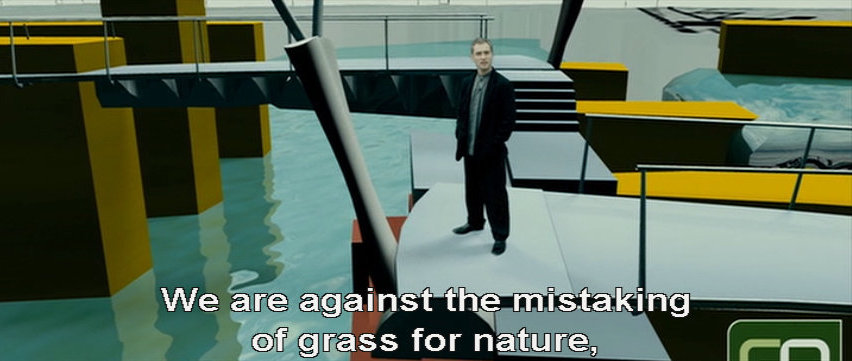
Jude Law, Breaking and Entering (≈0:26, emphasis added):
Our vision for King’s Cross, for the public spaces of King’s Cross, starts with the premise that we acknowledge an urban landscape is a built landscape. It starts with an argument with society’s phony love affair with nature. We are against the mistaking of grass for nature, of green for nature.
King’s Cross is an area of North London associated with poverty, crime, vice, and urban decay. Our job is to transform the landscape, not decorate it with green. Because how we feel about ourselves, how we behave, is directly affected by the space around us. How we design the outdoors of our city is as important as how we design the indoors.
Select a category to see additional posts. Add feed/ to a category to subscribe via RSS
The foregoing posting appeared on Joe Clark’s personal Weblog on 2012.09.15 16:09. This presentation was designed for printing and omits components that make sense only onscreen. (If you are seeing this on a screen, then the page stylesheet was not loaded or not loaded properly.) The permanent link is: https://blog.fawny.org/2012/09/15/breakingandentering/
Every other time I go out to eat with a group, be it family, friends, or acquaintances of whatever age, conversation routinely plunges into a discussion of when it is appropriate to pull out a phone. People boast about their self-control over not checking their device, and the table usually reaches a self-congratulatory consensus that we should all just keep it in our pants.
You have never been more conscious of your offline life in your entire offline life.
The ability to find information is to us something as basic as the ability to find a railway station or a post office in an unknown city is to you. When we want to know something… [w]e know that we are going to find the information we need in a lot of places…. Should we need the details, we can look them up within seconds.
Online life is a variant, form, or flavour of offline life.
Select a category to see additional posts. Add feed/ to a category to subscribe via RSS
The foregoing posting appeared on Joe Clark’s personal Weblog on 2012.09.14 14:59. This presentation was designed for printing and omits components that make sense only onscreen. (If you are seeing this on a screen, then the page stylesheet was not loaded or not loaded properly.) The permanent link is: https://blog.fawny.org/2012/09/14/irl-kids/
Select a category to see additional posts. Add feed/ to a category to subscribe via RSS
The foregoing posting appeared on Joe Clark’s personal Weblog on 2012.09.11 16:09. This presentation was designed for printing and omits components that make sense only onscreen. (If you are seeing this on a screen, then the page stylesheet was not loaded or not loaded properly.) The permanent link is: https://blog.fawny.org/2012/09/11/folded-spindled/