Select a category to see additional posts. Add feed/ to a category to subscribe via RSS
The foregoing posting appeared on Joe Clark’s personal Weblog on 2013.11.23 13:09. This presentation was designed for printing and omits components that make sense only onscreen. (If you are seeing this on a screen, then the page stylesheet was not loaded or not loaded properly.) The permanent link is: https://blog.fawny.org/2013/11/23/clientsuit/
Here we have Brand in the dog (not quite “puppy”) mask or hood he crafted himself. (Via his Facebook.)
This beautiful physical object beats the shit out of whatever “comp” you banged together in Photoshop. (I will excuse the use of leather in this case.) And really, they should be called hound masks or hound hoods.
I have read extensively about so-called puppy play. (Like grey goo, worried well, and bathroom bill, beware of cutesy alliterative neologisms. I suppose hound hood is one of those.) I have watched various of the videos, particularly those of Brand’s master, Jyan Delamotte (no relation). I breezed through Puppy Night at the Eagle last week – a dozen staph infections waiting to happen. I am not sold on the sexual aspect whatsoever. I also don’t disapprove. It’s a fetish, but so are a lot of things.
But I do respect the model demonstrated by Brand. Since Egypt, if not from time immemorial, donning a mask lets you forget about being yourself. Of course we know it’s still you, but that is exactly what you forget. I don’t think it’s about dissimulation or pretending or acting.
I see the advantage of Brand’s variant of puphood as being able at last to forget every single thing, to follow your leader, to be.
I would further commend Brand for his introduction video, its – his – touching honesty enabled by wearing another mask or hood of his own creation.
Select a category to see additional posts. Add feed/ to a category to subscribe via RSS
The foregoing posting appeared on Joe Clark’s personal Weblog on 2013.11.21 16:04. This presentation was designed for printing and omits components that make sense only onscreen. (If you are seeing this on a screen, then the page stylesheet was not loaded or not loaded properly.) The permanent link is: https://blog.fawny.org/2013/11/21/kennelled/
Chronicling of the already-chronicled, plus intentional misrepresentation of history. It’s another issue of Eye.
Rick Poynor, once again defining the “neglected”
Who won this issue’s Eye Hagiography Sweepstakes? Eduardo Paolozzi. He was a Scottish collagist whom Rick Poynor (inevitably) describes as “neglected.” Except for the fact that Poynor wrote the copy for this double-pager about him that is itself tied to the news hook of a gallery showing, complete with published monograph. Then there’s the additional touring exhibition. And Paolozzi was knighted by Her Majesty. So yes, “neglected.”
Poynor’s confusion hypocrisy is summed up well in this Orwellian sentence fragment: “despite his knighthood in 1988 – or maybe, in some way, because of the establishment’s embrace – Paolozzi had become a critically neglected figure.” I guess “critically neglected” means “It took the only critic that matters till Eye 86 to write about him.” Except it doesn’t even mean that, because there’s a second book in production about Paolozzi, Poynor admits, “for which I have written the introduction.”
And (can you believe we aren’t done yet?) how can Paolozzi be “neglected” if a “presentation” of his collages “to members of the Independent Group at the ICA in London, in 1952, was a defining moment of what would later be named Pop Art”?
Select a category to see additional posts. Add feed/ to a category to subscribe via RSS
The foregoing posting appeared on Joe Clark’s personal Weblog on 2013.11.17 14:11. This presentation was designed for printing and omits components that make sense only onscreen. (If you are seeing this on a screen, then the page stylesheet was not loaded or not loaded properly.) The permanent link is: https://blog.fawny.org/2013/11/17/eye86/
Select a category to see additional posts. Add feed/ to a category to subscribe via RSS
The foregoing posting appeared on Joe Clark’s personal Weblog on 2013.10.11 14:25. This presentation was designed for printing and omits components that make sense only onscreen. (If you are seeing this on a screen, then the page stylesheet was not loaded or not loaded properly.) The permanent link is: https://blog.fawny.org/2013/10/11/garnet-inversion/
Why is design so popular it is now actually critiqued? Justin McGuirk isn’t talking about graphic design, but his is the best analysis yet:
Furniture was interesting in the early twentieth century when it was imbued with ideology and notions of progress. It was still interesting in the mid-century when it gave vent to a burgeoning middle class’s sense of taste. Now that those same manufacturers have abandoned the middle class to become a luxury industry, Ikea is left to cater to the majority and there is nothing in between. This makes furniture a microcosm of the economy at large, where the rich get richer and the rest get by. That ought to be interesting, except that good taste prevailed where it counts: At the bottom of the market. […]
The truth is that technology feels more alive to us than it did in the days when we dreamed of flying cars because we’re witnessing mind-boggling advances on an annual basis now, in our very hands and not in the pages of some pulp comic. The pace of change dazzles us and so critics court geekdom for insights into the new commodity fetishism… [s]o we scan the horizon for signs that technology will liberate us even as it enslaves us.
Select a category to see additional posts. Add feed/ to a category to subscribe via RSS
The foregoing posting appeared on Joe Clark’s personal Weblog on 2013.10.11 14:12. This presentation was designed for printing and omits components that make sense only onscreen. (If you are seeing this on a screen, then the page stylesheet was not loaded or not loaded properly.) The permanent link is: https://blog.fawny.org/2013/10/11/mcguirk/
Roy Horn: “I had high blood pressure at that time, and because of the energy level of the show, I got excited and passed out onstage and fell, unfortunately…. Montecore looked at me with his big blue eyes and was confused, and so he picked me up by the neck…. He brought me to the side so he could attend to me… [H]e never attacked me. If a tiger attacks you, you are finished.”
Select a category to see additional posts. Add feed/ to a category to subscribe via RSS
The foregoing posting appeared on Joe Clark’s personal Weblog on 2013.10.11 13:59. This presentation was designed for printing and omits components that make sense only onscreen. (If you are seeing this on a screen, then the page stylesheet was not loaded or not loaded properly.) The permanent link is: https://blog.fawny.org/2013/10/11/eldergay-suicide/
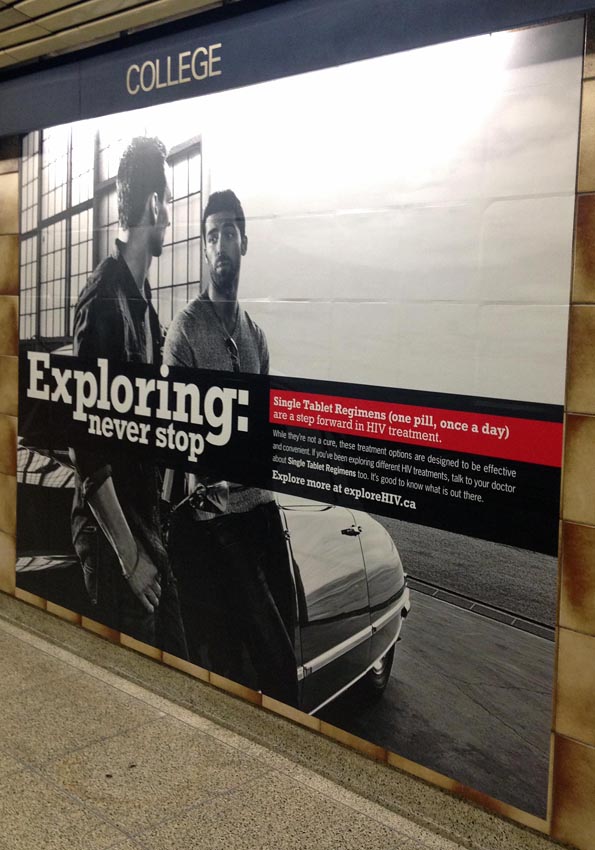
Perhaps you’ve seen the baffling ad campaign that seems to be about HIV awareness. If you walked through College station over the summer and had something resembling functional eyesight, you couldn’t have missed it.
Select a category to see additional posts. Add feed/ to a category to subscribe via RSS
The foregoing posting appeared on Joe Clark’s personal Weblog on 2013.10.05 08:16. This presentation was designed for printing and omits components that make sense only onscreen. (If you are seeing this on a screen, then the page stylesheet was not loaded or not loaded properly.) The permanent link is: https://blog.fawny.org/2013/10/05/explorehiv/
Select a category to see additional posts. Add feed/ to a category to subscribe via RSS
The foregoing posting appeared on Joe Clark’s personal Weblog on 2013.10.04 15:29. This presentation was designed for printing and omits components that make sense only onscreen. (If you are seeing this on a screen, then the page stylesheet was not loaded or not loaded properly.) The permanent link is: https://blog.fawny.org/2013/10/04/endse/


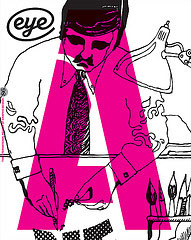 Chronicling of the already-chronicled, plus intentional misrepresentation of history. It’s another issue of Eye.