Asaf ordered all of us over to a flat area to take a photograph. After we all posed, he said my name, and then, “Will you come over here, please?”
Good grief, I thought. I knew what this was. I had said that this wasn’t necessary, based on my reading of an etiquette book by Judith Martin, but Asaf insisted on all of the conventional American practices of the time.
He kneeled or knelt on the ground. Sarah came over and produced a candy ring from a package. He then asked if I would marry him, based on the new laws of the State of New York, and then gave the exact date, time, and location that we had already agreed upon.
“Sure,” I said.

‘ “Sure,” I said’
The foregoing posting appeared on Joe Clark’s personal Weblog on 2011.10.26 15:42. This presentation was designed for printing and omits components that make sense only onscreen. The permanent link is: https://blog.fawny.org/2011/10/26/welikemarriage/
Masculine or feminine type?
Drive by Nicolas Winding Refn (q.v.):

-
(L) Feminine original typography (in the troublesome Mistral, which only Excoffon used well; designer uncredited). Matches all of: Refn’s insistence the picture is “feminine”; muscular, round-edged, delicately-named star Gosling; Driver’s kitteny-soft champagne satin windbreaker. Pink
-
(R) Masculine revised typography by tight-bodied silver fox James White, here in a departure from his dated, mechanistic signature style. Fuchsia
2014 update
Also via James White:

The foregoing posting appeared on Joe Clark’s personal Weblog on 2011.10.25 15:51. This presentation was designed for printing and omits components that make sense only onscreen. The permanent link is: https://blog.fawny.org/2011/10/25/driveposters/
Women, who are equal to men, write better TV, women say
Did you know that women, who are equal to men, get the short end of the stick when it comes to writing American television? Why, a mere one-quarter of U.S. TV series have a woman on staff. Clearly this amounts to systemic discrimination. And, equally clearly, we’re all worse off, because women, who, again, are equal to men, are actually better in “the room,” according to a writer who is so equal it would be superfluous to own her own byline.
“A balanced writers’ room is like a balanced world. Everyone thrives, good work gets done, people like each other and the show is better for it,” said an experienced female writer who did not want to be named (let’s call her Writer A). “Women keep the room moving. They’re great at multitasking and getting along with others. They don’t procrastinate and they open up with lots of personal anecdotes that make for great stories on the show and great character beats. They tend to smell good.”
The situation is so bad in the United States that obviously it has to be just as bad in Canada, a sovereign nation with its own distinct culture. We are assured of such equivalence in a feature article by a woman writer with a secure newspaper job and a history of snagging journalism fellowships.
Her colleague at the same paper – a male writer, obviously equal but, just as obviously, not as good in the room – pointed out the unique Canadian television series created by and written by a woman. (The head writer there is a gay male. He is obviously and incontrovertibly completely equal to any woman, women would admit. He may potentially turn out to be more or less equal to other men, those other men might, if pressed, reluctantly concede.)
But then a male curmudgeon – not a writer, but the equal of any female curmudgeon, the latter of which surely work better in the room – had the temerity to note that all the popular English-language Canadian TV shows were created by and/or are written or run by women.
It is, however, accepted by everyone that the plight of women, equal yet superior yet oppressed, urgently needs feature-length discussion and redress. Writing for TV is a desirable job held by men, so it just stands to reason that women deserve half those jobs – and that has to happen immediately if not sooner. Other groups whose members never get any chance whatsoever to write for TV, like persons with disabilities, will simply have to wait until women hold half the jobs. Then we’ll all be equal and then we can start talking about some other subject.
The foregoing posting appeared on Joe Clark’s personal Weblog on 2011.10.23 13:33. This presentation was designed for printing and omits components that make sense only onscreen. The permanent link is: https://blog.fawny.org/2011/10/23/wymmynz/
What exactly is Scott Schuman’s business?
Scott Schuman writes the Sartorialist blog, which I gather some people find interesting. Schuman rather lost me when he described two Muslims in hijab as “typical teens, Stockholm.” Sure – 20 years from now when they take over Sweden.
Now we have a rigourless, overlong posting from Imran Ahmed, editor of the soi-disant Business of Fashion Weblog. If you were expecting “the business of blogging” at the Sartorialist to be explained, prepare for disappointment.
-
“What I don’t like is advertorial posts that are under the table,” Schuman claims, then later admits he essentially ran under-the-table advertorials for Kiehl’s.
-
Schuman wouldn’t state his advertising book rate. (There may not be one.)
-
Schuman pulled in over a hundred grand in advance and royalties from his first book, and no less than $65,000 from a gallery show. Beyond that, Ahmed gives no dollar figures whatsoever, let alone any numbers that might justify the claim that Schuman “could theoretically [become] fashion’s first million-dollar-a-year blogger.”
In fact, based on the wording of the post, Ahmed didn’t ask nice, simple questions about dollars and cents, such as “What was your gross income last year?” or “How much money did you take in just from your blog last year?” When I asked Ahmed why he didn’t bother committing actual journalism, he refused to respond.
Fashion does not actually want to be taken seriously.
The foregoing posting appeared on Joe Clark’s personal Weblog on 2011.10.20 13:59. This presentation was designed for printing and omits components that make sense only onscreen. The permanent link is: https://blog.fawny.org/2011/10/20/sartorialist-business/
David Crystal’s hundred words
David Crystal is the English etymologist and linguist everybody likes. His upcoming book The Story of English in 100 Words was excerpted in the Independent, which nearly completely muffed the actual list of 100 words (including misreading backformation as “back-information,” a novice error).
Here, then, are David Crystal’s hundred words in a form you can actually understand. (Century of coinage in parentheses.) [continue with: David Crystal’s hundred words →]
The foregoing posting appeared on Joe Clark’s personal Weblog on 2011.10.20 13:53. This presentation was designed for printing and omits components that make sense only onscreen. The permanent link is: https://blog.fawny.org/2011/10/20/100words/
‘Counterpunch’
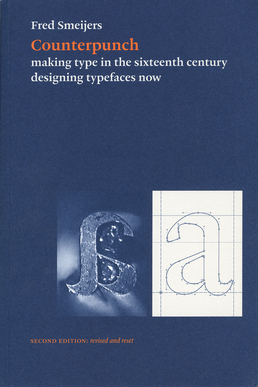 The only truly detailed and challenging book on typographic history that is also enjoyable to read comes out in a new edition this year. I know for a fact that intelligent nonexperts can read and understand Counterpunch by Fred Smeijers, and learn a lot in the process. And all this from a writer who isn’t a native English-speaker.
There’s a reason why Counterpunch is a classic. Throw your Bringhursts on the bonfire.
The foregoing posting appeared on Joe Clark’s personal Weblog on 2011.10.18 16:26. This presentation was designed for printing and omits components that make sense only onscreen. The permanent link is: https://blog.fawny.org/2011/10/18/counterpunch/
- ☟
Only 3% of Ford buyers choose “trend colours” like ochre or pink.
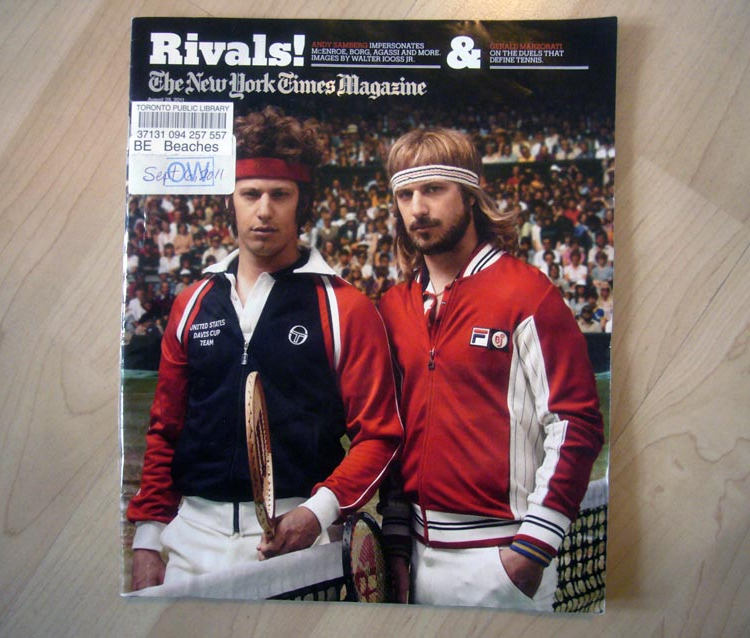
Björn Samborg Blanche

The foregoing posting appeared on Joe Clark’s personal Weblog on 2011.10.17 14:13. This presentation was designed for printing and omits components that make sense only onscreen. The permanent link is: https://blog.fawny.org/2011/10/17/bjorn/
‘Weekend’ update
(UPDATED) Let’s catch up with the most acclaimed homosexualist film since Parting Glances, Weekend, written and directed by the graceless Andrew Haigh.
Now, this is a great picture
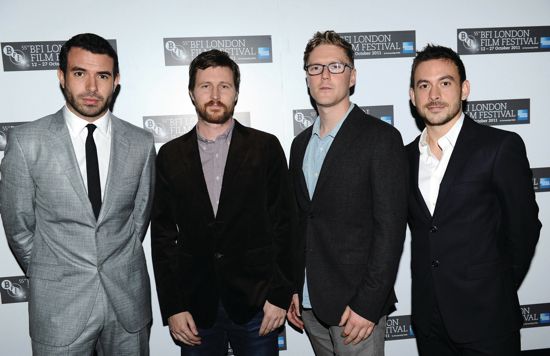
(Ian Gavan, Getty Images)
News items
-
Did you know the movie has a 100% score on Rotten Tomatoes? That’s only because Ed Champion and I aren’t included in their rankings. Oh, whoops! It’s actually 93%, because those marginal contrarians at the New Yorker panned it.
-
I told you this thing would make money: Weekend, which cost about 100,000 quid to make, has already raked in 189,000 bucks just in limited U.S. release. Of course everyone up and down the line takes a cut, but please: Even Hollywood studio accountants couldn’t turn this thing into a money-loser.
-
Anderson Cooper went to see it. With Ben, I assume. Bret Easton Ellis loved it.
Nick Denton, who fell in love with the picture as though it were a million extra pageviews, held a private rooftop screening. Or maybe it was just the afterparty. At any rate, didn’t a marginal filmmaker know somebody who knew somebody who “thought the film was bad? He nodded. ‘You’re an idiot,’ [he] snapped.”
-
Russell and Glen really aren’t drug addicts, are they? (“Neither is as wasted as he probably should be.”) Obviously not: “There’s always some people, because there’s quite a lot of drugs in the film and all this kind of thing, people sometimes say I’m not sure you’re representing the community in a correct light.”
-
But finally some honesty from Haigh about who isn’t going to show up for what all their girlfriends would call a little gem of a picture: “I’m under no illusion that a bunch of straight guys are all going to go to the cinema on Friday night and watch it.” (Weekend manifestly is not “a gay movie for straight boys.”)
Because, at root, “progressive, accepting, straight [people] wish gays all the best, but they’re probably not too actively curious about what that best – or its opposite – means for their gay friends, if they have any.” Haigh agrees:
We all know what it’s like to tell our family and the people we love that we’re gay. That fear is still there. I think especially if you are not obviously gay, or if you could be perceived as straight, that it’s almost harder because you’re constantly having to come out.
Even with your straight friends, they almost forget you’re gay until you say something and they’re, like, “Oh, yeah.”
And you gauge your straight friends’ reactions, their visible discomfort if the conversation steers a certain way, the ways they can be oblivious to the ways in which your life and theirs is just not the same, and you condition yourself to censor yourself… because you feel uncomfortable. They can talk about girls they’ve had sex with and feel free to go into all sorts of details, but if you mention it, they’re, like, “Um….” So you censor yourself. The thing is, you shouldn’t censor yourself. You should just be as open as you can.
Elsewhere, Haigh admits:
Most of my friends are straight as well. Everyone is very accepting and everyone says it’s no problem, but I don’t really discuss too much with them. I think that may be the case for a lot of gay people whose friends are all straight. It’s not that you’re necessarily embarrassed. It’s just a hard thing to talk about and I think it’s hard on both sides.
The way, when guys get together and all talk about their girlfriends, it’s a bit different when you’re gay and talking to the guys about that. There’s an element of feeling uncomfortable. In this film, it’s Russell’s fear of what his friends will think rather than the actual reality.
-
Chris New says it was horribly embarrassing to fuck a straight guy on film. As opposed to real life, where it really brightens up your day.
The foregoing posting appeared on Joe Clark’s personal Weblog on 2011.10.16 16:03. This presentation was designed for printing and omits components that make sense only onscreen. The permanent link is: https://blog.fawny.org/2011/10/16/weekendupdate1/