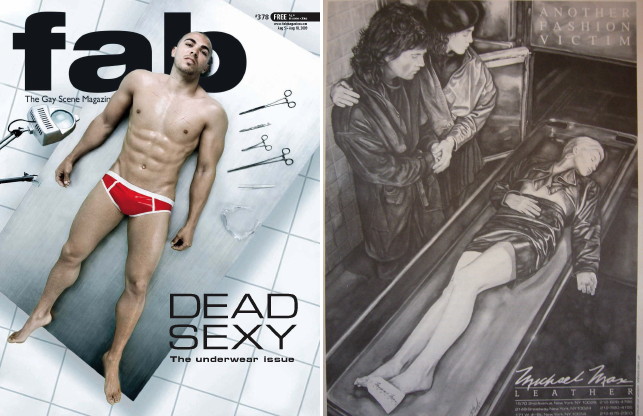
On the left, the cover of today’s homosexualist trash fortnightly (a phrase that can be rearranged however you wish), Fab. On the right, an ad from the April 1988 Spy.
The Fab issue devotes most of its feature well to a set of fashion spreads. “Dead Sexy” carries the following lede:
Tragedy struck en route to Fab’s annual underwear shoot. Swerving to avoid an adorable fluffy kitten, Fab’s busload of models and undergarments plunged off a cliff and all on board succumbed to the injuries sustained. Due to the recession[,] Fab was unable to afford a new crew of models…. [E]ver-resourceful photographer G. Elliott Simpson… was able to convince the coroner [continues for some time – Ed.].
In other words, it’s a fashion shoot of skinny boys in underwear pretending to be dead. I gather this is sexy as far as some young fags are concerned.
When Fab’s associate editors were still in kindergarten, Michael Max Leather’s advertisement in Spy, headlined “Another Fashion Victim,” prompted a minor scandal. Note the model on the slab is actually toe-tagged. Note also it’s an illustration.
If gay porn isn’t like straight porn (it isn’t), is gay fashion photography different from fashion illustration? Yes, because it’s real. Here Fab makes fucking a dead guy seem racy and naughty. But where does that idea fit in the continuum of gay history?
They wouldn’t know, of course. They’re too young to have anything resembling the general cultural memory that let me dig up the antecedent in Spy in mere minutes. They don’t know the story of Dennis Nilsen, a British homosexualist mass murderer with erotic fantasies of death. (They haven’t read Killing for Company.) The Nilsen case was so shocking and, as serial killings tend to be, celebrated that it inspired a dance piece, and later film, by DV8 Physical Theatre, Dead Dreams of Monochrome Men (q.v.).
They don’t even know about Jeffrey Dahmer.
Here, then, is the future of the gay community – the gay community, not any other one – in a nutshell: Twinks ignorant of the history of their own kind blithely reopening old wounds. These are, of course, the same guys who in fact only know unsafe sex and will keep AIDS alive for another hundred years (even as it kills them all off or turns them into Joe·My·God-like deformities).
It is even more unnerving that this abomination saw the light of day given that Fab is operated by the same conglomerate that owns all or part of nearly every other gay media outlet in Canada – including, soon enough, one of the porn channels. One would have expected more in the way of institutional memory.
Select a category to see additional posts. Add feed/ to a category to subscribe via RSS
The foregoing posting appeared on Joe Clark’s personal Weblog on 2009.08.06 20:23. This presentation was designed for printing and omits components that make sense only onscreen. (If you are seeing this on a screen, then the page stylesheet was not loaded or not loaded properly.) The permanent link is: https://blog.fawny.org/2009/08/06/fabslab/
The Chilean desire for Antarctica is at least understandable. Antarctica offers Chile a vital natural resource it sorely lacks – width. – Maciej Cegłowski
Guys with iPhones is the hot new soft-core site that allows gays to demonstrate that the baubles in their murses are more than just fashion accessories. (And that they aren’t too dumb to run an iPhone.) It’s just trashy enough that Gruber won’t link to it – not even to its ultimate subversion, a G-rated picture. It goes without saying that Girls with iPhones is beside the point. There seems to be no editorial oversight, so I maintain a set of links: Curated Guys with iPhones.
I’m quite sure I’ve looked at every picture, and it’s just one nancy boy after another. What makes this man different?
It isn’t the thickness, the hi-’n’-tite (“heinie”) haircut, or the challenging stare. Those are tools he uses to flatten your defences (he will fuck you if he feels like it), but they aren’t it. The thing this guy does is take up space. He had to move the iPhone to the side to keep his face from getting covered up, but look where the elbows are. They’d be in your ribs if you were right beside him. Even on our left side, the arm that isn’t holding anything up.
Now take a cruise through any of the other males on the site. It probably wouldn’t be cruel to call them fairies. So take a cruise through any of the fairies on the site. I’ll let you do that on your own time. See how they fold in on themselves, almost apologizing for taking up space? That’s important.
There are many ways to apply this test. On a not-very-crowded subway train, do two guys sit right down next to each other no problem? Gay. (Same thing at the movies.)
At the airport, do two guys sit with one or more empty seats between them, knees wider spaced than their hips, with their bags on the floor off to the side? Not gay.
Here’s a thought experiment for you. What is the minimum horizontal space half a dozen guys who swim on a gay team need versus the equivalent minimum for a varsity team? (Just while seated on a bench or something.) How about half a dozen gay guys who go to the Y compared to half a dozen college hockey players? If they’re all lined up at the gym waiting to get their ID cards renewed or something, just how much space do they take up? Who takes up more space and just acts like he’s got it coming to him?
As La cage aux folles taught us, it borders on impossible to unlearn the gait and movements of the body. It’s another way we can tell who’s queer – without even having to wait to hear a word containing an S. What makes this man different? He carries himself like one.
Select a category to see additional posts. Add feed/ to a category to subscribe via RSS
The foregoing posting appeared on Joe Clark’s personal Weblog on 2009.08.04 12:55. This presentation was designed for printing and omits components that make sense only onscreen. (If you are seeing this on a screen, then the page stylesheet was not loaded or not loaded properly.) The permanent link is: https://blog.fawny.org/2009/08/04/guyswidthiphones/
One of the many Canadian and foreign copyright experts who has completely ignored a direct personal request to endorse The Cranky Copyright Book, Howard Knopf, takes Charles Nesson to task for losing a not-very-major copyright case. (It’s not very major because it isn’t precedent-setting and did not take place in a high court. That doesn’t mean the case isn’t newsworthy.)
Knopf makes a resounding case for Nesson’s arrogance and incompetence. But, just as the American recording industry picks on small-time offenders, Knopf derides a law professor who lost a minor case while giving a pass to another professor who lost a major one.
I refer of course to Lawrence Lessig, who completely borked an appearance before the U.S. Supreme Court. This hero of the copyleft movement lost at the Supreme Court, a fact nobody wants to talk about, yet he is somehow viewed as an éminence grise in copyright-reform circles. If you’re an attorney in the U.S., there are many ways to lose, but there is no bigger way to lose than before the Supreme Court. Lessig managed it handily. Short of disbarment, there is nothing worse that can happen to the career of an American lawyer.
The fact that Lessig has ostensibly left the field of copyright reform behind him is another detail his supporters seem to have overlooked. (Why wouldn’t he change focus? He lost.)
Knopf berates Nesson, whom he essentially characterizes as an eccentric if not a kook, for mistaking the courtroom for a classroom. But this is exactly what Larry Lessig, held in wide esteem, admitted having done (emphasis added):
As I read back over the transcript from that argument in October, I can see a hundred places where the answers could have taken the conversation in different directions, where the truth about the harm that this unchecked power will cause could have been made clear to this court. Kennedy in good faith wanted to be shown. I, idiotically, corrected his question. Souter in good faith wanted to be shown the First Amendment harms. I, like a math teacher, reframed the question to make the logical point. I had shown them how they could strike down this law of Congress if they wanted to.
There were a hundred places where I could have helped them want to, yet my stubbornness, my refusal to give in, stopped me. I have stood before hundreds of audiences trying to persuade; I have used passion in that effort to persuade; but I refused to stand before this audience and try to persuade with the passion I had used elsewhere….
A better lawyer would have made them see differently.
Metaphorically speaking, Knopf should spend his time harpooning whales, not jigging blowfish.
Select a category to see additional posts. Add feed/ to a category to subscribe via RSS
The foregoing posting appeared on Joe Clark’s personal Weblog on 2009.08.04 11:55. This presentation was designed for printing and omits components that make sense only onscreen. (If you are seeing this on a screen, then the page stylesheet was not loaded or not loaded properly.) The permanent link is: https://blog.fawny.org/2009/08/04/knopf-nesson/
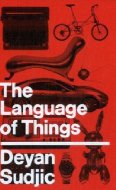
Deyan Sudjic has a nice British newsreader accent but, unlike Alain de Botton, can claim to be have come upon it honestly – by actually growing up in Britain. Sudjic applies this national feel with unwavering consistency in The Language of Things, a smart book about industrial design that is easy to read. It proceeds methodically – as do his verbal presentations, if podcasts are to be believed.
This is a book of ideas with no take-aways, yet it succeeds at what it attempts to do. I could not possibly recount from memory any of the points made in the book. It’s all about flow, it all makes sense, and you forget it five minutes later. This is not really a criticism.
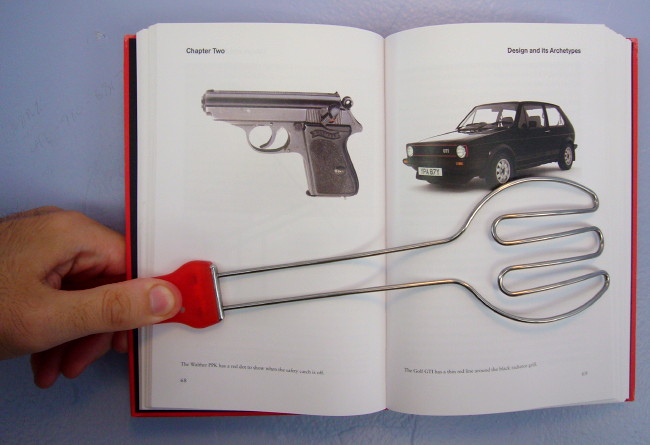
And, thankfully, this is one design intellectual who understands he must show the object he’s talking about. When will we ever do away with the genre of design writing that’s all words and no pictures? (I just flipped through a book about Maus at the library and left it there because it didn’t include a single illustration.)
I would add that the photos in the book are quite dramatic and reflect due curatorial care, as one would expect from the director of the Design Museum. (Steve McQueen is in there!) I am now a believer in the power of the single red accent on an all-black object (Tizio lamp, pistol, Golf GTI).
Quotable quotes?
If an object comes with an extensive instruction manual, you can be fairly confident that it’s never going to be an archetype.
Consistent with what I’ve been saying all along, Sudjic differentiates designed objects from art objects using a simple criterion – usefulness. If it does something, it’s design(ed). If it doesn’t, it’s art.
[D]espite the eccentricity of form and structure, and despite MoMA’s best efforts, the Red Blue Chair remains to a certain degree stigmatized by the fact of being useful, no matter how slightly, unlike the entirely useless Mondrian painting.
(He uses -ized spellings, by the way, which is unusual for somebody quite so British.)
Art creates a language that design responds to. Design also plays its part in creating a visual vocabulary that shapes what artists do. But… it is the ability of an artist to question and to be critical that justifies what he does. For a designer to make a critical object is to bite the hand that feeds him. Without commerce, industrial design cannot exist.
As industrial designers cannot yet engage in the kind of personal work that the Web enabled for graphic designers. 3D printers are going to change all that.
And yet we now have a generation that produces not just design that aspires to be art, but even industrial objects that also suggest a certain detachment from materialistic considerations. Philippe Starck proposes that a gold-plated replica of a Kalashnikov assault rifle is an appropriate ready-made base for a table lamp, and suggests, somewhat obscurely, to those who question his taste that it is a work intended as a piece of criticism.
And:
Paola Antonelli…, who put on [Ron] Arad’s first show [at MoMA], maintains that there is something questionable about the idea of design that does not have at least the ambition of mass production. So for her it is possible to permit Arad into the museum only if she can detect the intention for his work to be understood as design, to be produced in multiples.
If this is irony, then it is an irony that is likely to escape the attention of the Chechen warlords or Colombian godfathers who would find it a congenial accessory for their living rooms.
In any reissue of the book (such things are rare), Sudjic might profitably consider the ethics of Damien Hirst, with his transsected and dissected sharks and cows.
Select a category to see additional posts. Add feed/ to a category to subscribe via RSS
The foregoing posting appeared on Joe Clark’s personal Weblog on 2009.07.31 15:53. This presentation was designed for printing and omits components that make sense only onscreen. (If you are seeing this on a screen, then the page stylesheet was not loaded or not loaded properly.) The permanent link is: https://blog.fawny.org/2009/07/31/languageofthings/
Robert Brownjohn was a hellraising graphic designer working in the ad industry in the ’60s. An American living mostly in London, and for years a heroin addict, Brownjohn is famous for pulling a Saul Bass and designing the credits for Goldfinger and other films. Among his several business partners over the years were Chermayeff and Geismar.
Robert Brownjohn: Sex and Typography is the ill-titled retrospective by Emily King. His career really wasn’t about “sex and” anything. Recall that the field of graphic-design biography, which King has pioneered, is something Heller decried, more or less because it hadn’t occurred to him, meaning he missed his big chance to corner that market along with every other one. King’s style here is one of almost unadorned quotes from the people who knew him, an oral-history approach I’ve always liked.
Two items are of interest.
Designers know more than the sum of the facts
In other words, Doug Bowman is going to know more about Web design than Google programmers.
When this [peace] poster was reproduced in Typographica 2 (December 1960), it was prefaced with an introduction written by BCG’s fellow New York designer Gene Federico: “The aware designer’s intuitive and acquired knowledge invests in him a more reliable sense of his times and the needs of the people. Sensing these, he is able to ‘talk’ directly. He knows intuitively the language of his day.” [p. 132]
“Personal work” was impossible before the Web
It was promoted with a postcard-sized print on which [Edward] Booth-Clibborn quoted Brownjohn saying “I’m not a painter or a sculptor. I’m a graphic designer. I’ve got to have a client. I can’t just sit down and work because I feel like it.” [p. 235]
Select a category to see additional posts. Add feed/ to a category to subscribe via RSS
The foregoing posting appeared on Joe Clark’s personal Weblog on 2009.07.31 14:58. This presentation was designed for printing and omits components that make sense only onscreen. (If you are seeing this on a screen, then the page stylesheet was not loaded or not loaded properly.) The permanent link is: https://blog.fawny.org/2009/07/31/brownjohnism/
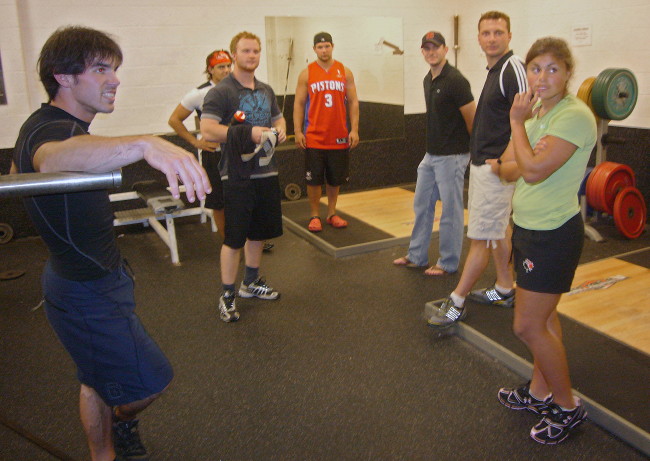
Last Saturday I got up pretty much at the crack of dawn and, one coffee and three and a half hours later, arrived at the National Track & Field Centre at York University. Let’s recruit us some bobsledders!
Since I can barely push a shopping cart, of course I was there to cover it, not to try out. (Pictures.)
A futures business
I managed to miss the real show, the sprint trials, at the start of the event. Fully 17 athletes tried out. By the time I got there, the field had thinned to seven (including a single wymmynz).
I spotted Bobsleigh Canada’s assistant coach, Florian Linder, right away and said hi. Then there was the question of who the (other) old guy was. Mike Ransky, formerly one of those track stars you keep seeing on the red carpet of the Oscars, is an on-again/off-again bobsledder. (He was a pusher in the four-man and brakeman on the two.) And he’s only 39! So I ought to be careful here with the word “old.”
But does his age mean the sport is something Old Guys™ can keep right on doing? It’s changing, he said. We’re attracting more talent. We’re finding more football players, rugby players, people coming out younger, he said. Bobsleigh, I would later learn, is a futures business. You’ve got to have new kids on the starting block. (Especially with all the retirements coming up after 2010.)
I chatted him up a bit more. IsPatrice Servelle the most sarcastic bobsledder? “Oh! You know him!” he exclaimed. Well, only “on the Facebook,” I said. Maybe not sarcastic, but he is funny, Mike said. And isAnas the littlest bobsledder? This Mike wouldn’t admit. (But he is. And such a playboy!)
I got there in time for weightroom testing.
To qualify in first instance, you have to perform two 30-metre sprints, a sled pull, and clean, squat, and bench press. You’ve got to be a lightning-fast giant to make it in bobsleigh, or, more precisely, you have to be strong as an ox and as fast as somebody two-thirds your bodyweight. Is that you? It isn’t me. [continue with: Bobsleigh camp 2009 →]
Select a category to see additional posts. Add feed/ to a category to subscribe via RSS
The foregoing posting appeared on Joe Clark’s personal Weblog on 2009.07.30 14:08. This presentation was designed for printing and omits components that make sense only onscreen. (If you are seeing this on a screen, then the page stylesheet was not loaded or not loaded properly.) The permanent link is: https://blog.fawny.org/2009/07/30/bobsleighcamp09/
Mathew Ingram, a man with a gentle personal style despite the nagging thorn he refuses to remove from his own side, takes my esteemed colleague to task using the hot new cyberbullying medium, the Twit: “[W]hat kind of dramatic changes have you made at a large traditional media entity recently? Feel free to post a full or partial list.”
Well, here’s what Globe and Mail “communities editor” Ingram has managed:
Add a buzzword from 2006 – “Start the conversation” – to the footer of most articles posted on the Globe’s garish, anger-red Web site.
Publish false information that Steve Jobs had had a heart attack. He learned this “news” over his BlackBerry, but failed to use its Web, text-messaging, and telephone features to verify it before publication.
And, as we’ve seen, harass his critics. (His colleague Andrew Gorham [Who dat? – Ed.] goes one worse.) At the very least, Ingram and Gorham are using Twitter for the purpose to which it is best suited. Ingram has used it to insult me, too.
Meanwhile, he laughs all the way to the bank: Ingram maintains a crushing and irredeemable conflict of interest as co-owner of a technology conference, which, in any rationally managed journalistic operation, should preclude him from covering that same beat.
Select a category to see additional posts. Add feed/ to a category to subscribe via RSS
The foregoing posting appeared on Joe Clark’s personal Weblog on 2009.07.29 23:15. This presentation was designed for printing and omits components that make sense only onscreen. (If you are seeing this on a screen, then the page stylesheet was not loaded or not loaded properly.) The permanent link is: https://blog.fawny.org/2009/07/29/fullorpartiallist/
It’s an important question, given that Doctorow has spent much of the last decade promoting the value of “purely non-economic, non-commercial activity,” up to and including this week’s review of Free (blog version), in which he faults the author for disregarding such activity.
In a comment on an unrelated topic (going off-topic is typical of the copyleftist species), Doctorow opens a window onto his own finances:
[I]t’s pretty straightforward to make a guess at how much my writing income is: 100,000 copies of Little Brother in hardcover at $2 per in royalties; plus 17 foreign deals at about an average of $7,000; film option; theatrical adaptation; audio adaptation. 25 Guardian columns/year. Half a dozen short stories…[;] two other books published in 2008 and another scheduled for 2009. Three novels and a short story collection prior to that.
No, I’m not going to tell you exactly what I earn.
No need. We’ll just do our own math. Just covering 2008 and 2009, we’ve got:
Item
Low unit estimate
High unit estimate
Quantity
Low total estimate
High total estimate
Little Brother
$2
$2
100,000
$200,000†
$200,000†
Foreign deals
$7,000
$7,000
17
$119,000†
$119,000†
Film option
$10,000
$25,000
1
$10,000
$25,000
Theatrical adaptation
$2,500
$5,000
1
$2,500
$5,000
Audio adaptation
$15,000
$50,000
1
$15,000
$50,000
Other books: Advance
$20,000
$65,000
3
$60,000
$195,000
Other books: Royalties
$2
$2
10,000
$20,000
$20,000
Guardian columns
$100
$350
25
$2,500
$8,750
Totals
$429,000
$622,750
Notes
Figures for advance and royalties are certainly too low.
Theatrical-adaptation figure is a guess, as this isn’t my field. The dollar value is clearly nonzero or Doctorow wouldn’t have mentioned it.
Film-option figures are probably close to accurate; much depends on length of option and stature of author.
“Audio adaptation” presumably means a commercial audiobook (not a LibriVox-style volunteer reading and not a book on tape or DAISY book for blind people).
Daggered values are known accurate from source.
I would view these figures as accurate to one significant digit only, hence the low figure is probably $400,000 and the high figure $600,000. That’s over two years.
Hence it seems Cory Doctorow’s earnings solely from these sources are in the range of $200,000 to $300,000 a year.
Exclusions
Doctorow may occasionally receive fees for speaking engagements.
He certainly benefits from ad sales on Boing Boing, which, in 2005, was pulling in about a half-million Canadian a year. These revenues are difficult to estimate.
Doctorow probably receives royalties from his other in-print books.
Nonetheless, these supplements probably do not alter the order of magnitude of his annual earnings.
Lesson
Doctorow is a classic case of the power-law effect of Internet economics. He’s an outlier; he makes a great deal of money while a great many others make little or none.
I think there is something to be said for the caution that well-financed producers of cultural products are not necessarily acting in your best interests when they argue you should give your own cultural products away. Doctorow can afford to do that.
Select a category to see additional posts. Add feed/ to a category to subscribe via RSS
The foregoing posting appeared on Joe Clark’s personal Weblog on 2009.07.29 13:27. This presentation was designed for printing and omits components that make sense only onscreen. (If you are seeing this on a screen, then the page stylesheet was not loaded or not loaded properly.) The permanent link is: https://blog.fawny.org/2009/07/29/doctorow-income/
Our question of the day: Will noted technology commentator–cum–futurist Cory Doctorow ever learn how computers work?
First he was going around saying plain text (he means dumb-as-a- mule US-ASCII text) is the most adaptable format. It’s actually the least, since it contains no structure. Any structured format – your choice, even OpenOffice – beats plain text hands down. Strike one.
Now Doctorow wants to be able to edit InDesign-produced PDFs on the Linux laptop he bought to be ideologically pure. It isn’t true one absolutely cannot edit a PDF, but as they are binary files, the difficulty is orders of magnitude higher. The legitimate PDF experts I’ve spent time with create applications that write their own PDFs. But you can’t just go in and delete a comma. Strike two.
And the punchline? There’s always a punchline, and here it is: The noted commentator/futurist deleted my comment that merely said “You can’t. That’s not what PDF is for.”
Cory Doctorow, committed as ever to open cultural discourse. Someday he might even “learn computers.”
Select a category to see additional posts. Add feed/ to a category to subscribe via RSS
The foregoing posting appeared on Joe Clark’s personal Weblog on 2009.07.28 13:56. This presentation was designed for printing and omits components that make sense only onscreen. (If you are seeing this on a screen, then the page stylesheet was not loaded or not loaded properly.) The permanent link is: https://blog.fawny.org/2009/07/28/doctorow-pdf/

 This is a book of ideas with no take-aways, yet it succeeds at what it attempts to do. I could not possibly recount from memory any of the points made in the book. It’s all about flow, it all makes sense, and you forget it five minutes later. This is not really a criticism.