Artwork-wise there were a couple [of] different things going on. The front cover, it’s [by] two guys who have a graphics house up in Vancouver called Mondolithic. Ken[n] Brown, the main guy, he and I sort of got together and I said, “This is the font I want to use.” Stop me if this is getting way too theoretical.
No, Bob, it isn’t. Letters are things, not pictures of things, let alone theories of things.
I sort of used that dense compressed Helvetica font on the three records Modulate, LoudBomb and the live record [sic], so I go to the Interstate font. It’s a little bit louder version of it. It’s got a little bit more pitch….
And Univers, seen in his blog header, doesn’t? Somehow I have a hard time accepting that the evolving persona of Bob Mould can be adequately communicated by angled terminals. (“What kind of sansserif typeface defines me as a person?”)
Select a category to see additional posts. Add feed/ to a category to subscribe via RSS
The foregoing posting appeared on Joe Clark’s personal Weblog on 2006.03.17 14:00. This presentation was designed for printing and omits components that make sense only onscreen. (If you are seeing this on a screen, then the page stylesheet was not loaded or not loaded properly.) The permanent link is: https://blog.fawny.org/2006/03/17/mouldism/
Select a category to see additional posts. Add feed/ to a category to subscribe via RSS
The foregoing posting appeared on Joe Clark’s personal Weblog on 2006.03.16 18:28. This presentation was designed for printing and omits components that make sense only onscreen. (If you are seeing this on a screen, then the page stylesheet was not loaded or not loaded properly.) The permanent link is: https://blog.fawny.org/2006/03/16/yet-more-le-griffe/
When hearing people first watch captioning, they lose their shit when so much as a word is dropped. I don’t know where people got the idea that every single word has to be captioned. And, as this posting will explain, there is no useful way to assign a number to captioning errors.
What we’re gonna talk about
What captioning actually is
How captioning errors are measured
Dropping words from captions, and whatever difference that might or might not make
An actual example
And a conclusion
What captioning actually is
Captioning is not transcription; it merely starts with transcription. There are many circumstances where we strive for, and very often attain, verbatim captioning, and other cases where we do not and do not.
But if we use, as a basis, a verbatim transcript (even an idealized verbatim transcript that does not exist in any form), how do we count or quantify captioning errors?
I was thinking about this while reading the many FCC interventions. Let’s start with real-time captioning, that is, captioning produced by a stenographic process. (See photos of stenotype keyboards.) It is ordinarily reserved for live events, but now also used by cheap-ass producers who don’t give a shit about captioning and shop only on price.
Qualified stenotypists can produce 180 words a minute for long periods. That’s actually a conservative estimate. My esteemed colleague Gary D. Robson, who really should start answering my E-mails, writes in The Closed Captioning Handbook: “Real-time stenocaptioners must regularly work at sustained speeds of over 225 words per minute with accuracy of 99% or better.”
Select a category to see additional posts. Add feed/ to a category to subscribe via RSS
The foregoing posting appeared on Joe Clark’s personal Weblog on 2006.03.15 13:02. This presentation was designed for printing and omits components that make sense only onscreen. (If you are seeing this on a screen, then the page stylesheet was not loaded or not loaded properly.) The permanent link is: https://blog.fawny.org/2006/03/15/caption-errors/
Select a category to see additional posts. Add feed/ to a category to subscribe via RSS
The foregoing posting appeared on Joe Clark’s personal Weblog on 2006.03.14 15:40. This presentation was designed for printing and omits components that make sense only onscreen. (If you are seeing this on a screen, then the page stylesheet was not loaded or not loaded properly.) The permanent link is: https://blog.fawny.org/2006/03/14/tango/
Select a category to see additional posts. Add feed/ to a category to subscribe via RSS
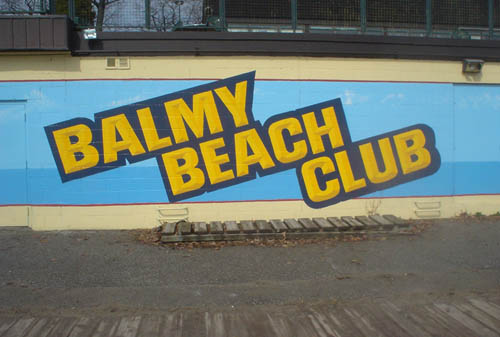
The foregoing posting appeared on Joe Clark’s personal Weblog on 2006.03.12 15:20. This presentation was designed for printing and omits components that make sense only onscreen. (If you are seeing this on a screen, then the page stylesheet was not loaded or not loaded properly.) The permanent link is: https://blog.fawny.org/2006/03/12/balmy/
Dan Savage, The Commitment (special to Bronislaw Smigel):
“See those women over there? Try to turn off your gay male pixelation.” I tend not to notice women, attractive or not; it’s as though they’re pixelated, like the bad guys on Cops.
Select a category to see additional posts. Add feed/ to a category to subscribe via RSS
The foregoing posting appeared on Joe Clark’s personal Weblog on 2006.03.11 13:56. This presentation was designed for printing and omits components that make sense only onscreen. (If you are seeing this on a screen, then the page stylesheet was not loaded or not loaded properly.) The permanent link is: https://blog.fawny.org/2006/03/11/pixelation/
Select a category to see additional posts. Add feed/ to a category to subscribe via RSS
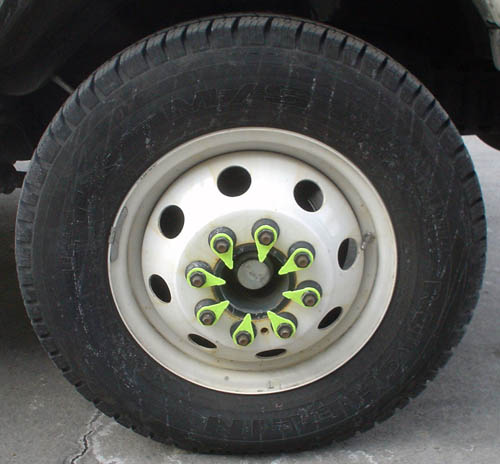
The foregoing posting appeared on Joe Clark’s personal Weblog on 2006.03.11 13:37. This presentation was designed for printing and omits components that make sense only onscreen. (If you are seeing this on a screen, then the page stylesheet was not loaded or not loaded properly.) The permanent link is: https://blog.fawny.org/2006/03/11/bolts/
Select a category to see additional posts. Add feed/ to a category to subscribe via RSS
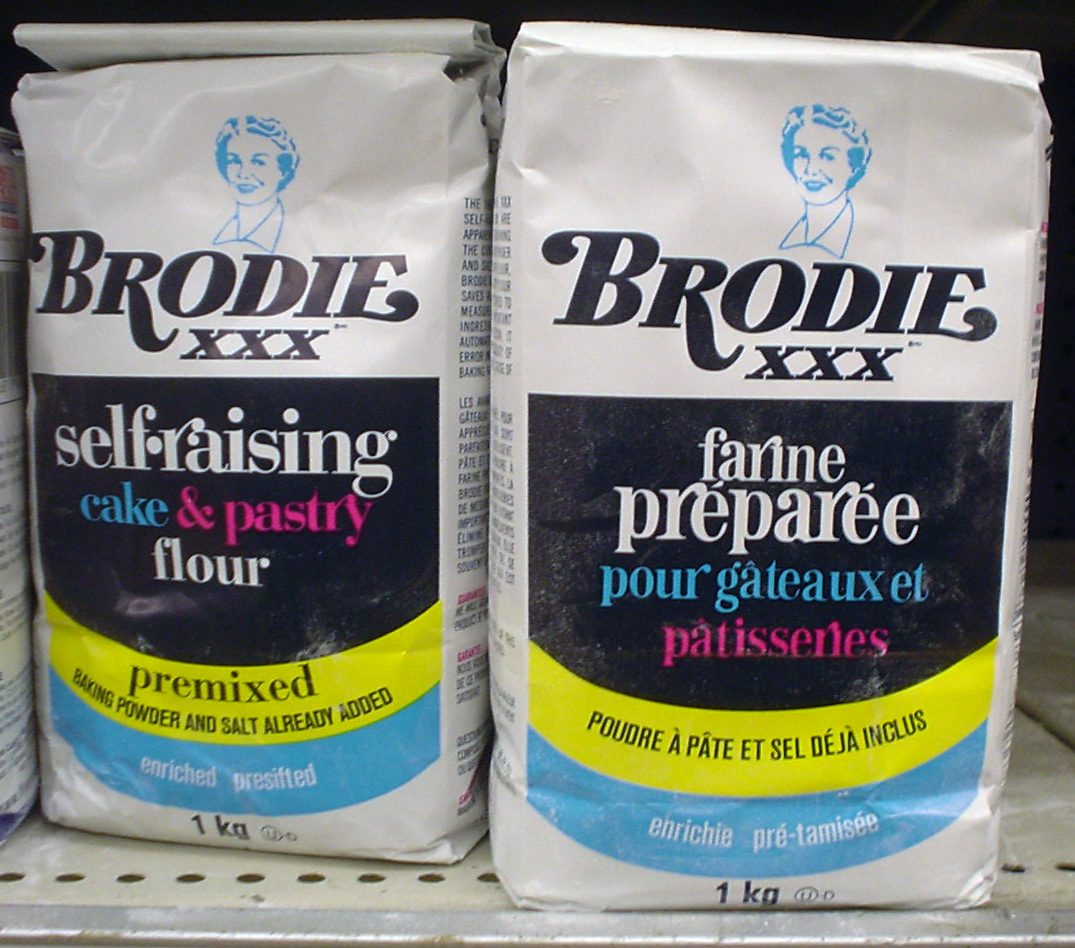
The foregoing posting appeared on Joe Clark’s personal Weblog on 2006.03.09 18:20. This presentation was designed for printing and omits components that make sense only onscreen. (If you are seeing this on a screen, then the page stylesheet was not loaded or not loaded properly.) The permanent link is: https://blog.fawny.org/2006/03/09/self-raising-pastiche/
In 2005, Telecommunications for the Deaf, Inc. (TDI) petitioned the FCC in the U.S. to update and extend its captioning requirements. Among many issues was a request to impose quality standards in captioning. A red flag to someone like me, shurely?! Not really. As part of a longer-term plan, I decided to just wait and read what everyone else had to say first (and also await an FCC decision, as yet unreleased).
The 1,663-strong list of interventions is available in an extremely large (4 MB) Web page that you should only load if you really know what you’re doing. (You can look at just the first hundred to start.) Each of the document links is actually a CGI call that will ultimately send a PDF to your browser with an unhelpful filename; I’m not even going to bother individually hyperlinking these entries to a page that is so manifestly anti-Web. (I dispute whether a page like this actually complies with 508.)
Select a category to see additional posts. Add feed/ to a category to subscribe via RSS
The foregoing posting appeared on Joe Clark’s personal Weblog on 2006.03.09 17:03. This presentation was designed for printing and omits components that make sense only onscreen. (If you are seeing this on a screen, then the page stylesheet was not loaded or not loaded properly.) The permanent link is: https://blog.fawny.org/2006/03/09/tdi-fcc/